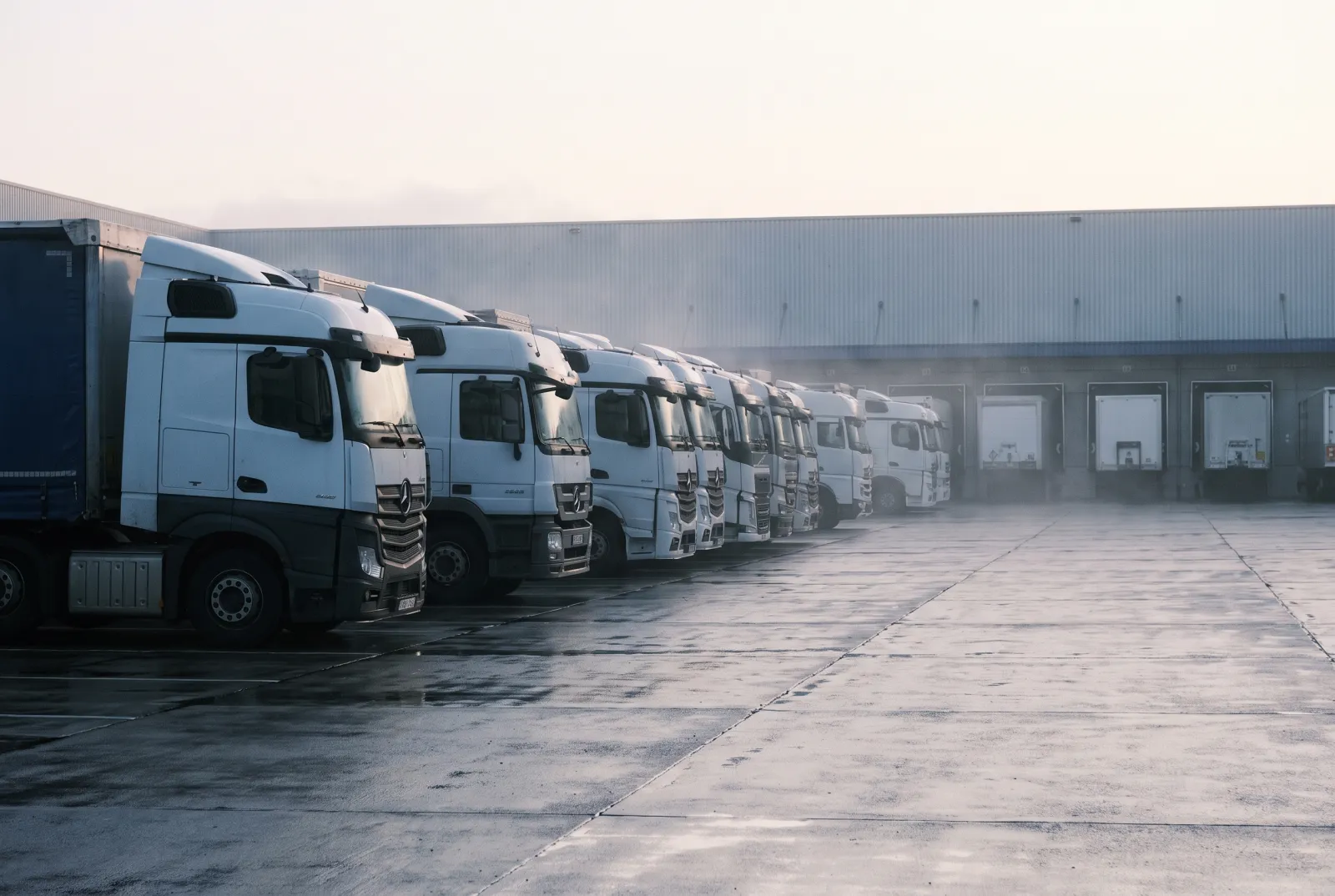
Every vehicle, every trip, on one record.
One place to see what your vehicles are doing, what each trip costs and how your drivers are driving. The record is written at the vehicle, not typed in afterwards.
Six questions a fleet asks before nine in the morning.
Where is every vehicle right now?
Live position, speed and heading for the whole fleet, with the route each vehicle has taken since it left the depot.
Which trips cost more than they earned?
Distance, hours, fuel drawn and idle time per trip, so a route that stopped paying for itself shows up the same week instead of at the end of the quarter.
Who is driving badly, and how badly?
Harsh braking, speed against the limit of the road, cornering and hours behind the wheel, scored per driver and ranked so coaching goes to the ten who need it.
What is the vehicle telling us before it breaks?
Engine faults, battery health and service intervals read from the vehicle bus and raised as a workshop job before the breakdown books the bay for a day.
Did the delivery happen, and can we prove it?
Arrival, waiting time and departure at each stop, tied to the trip record, so proof of delivery is a query rather than a phone call to the driver.
Where did the fuel go?
Fuel level against distance covered, per vehicle and per shift, with any drop that does not match a refuelling flagged for review.
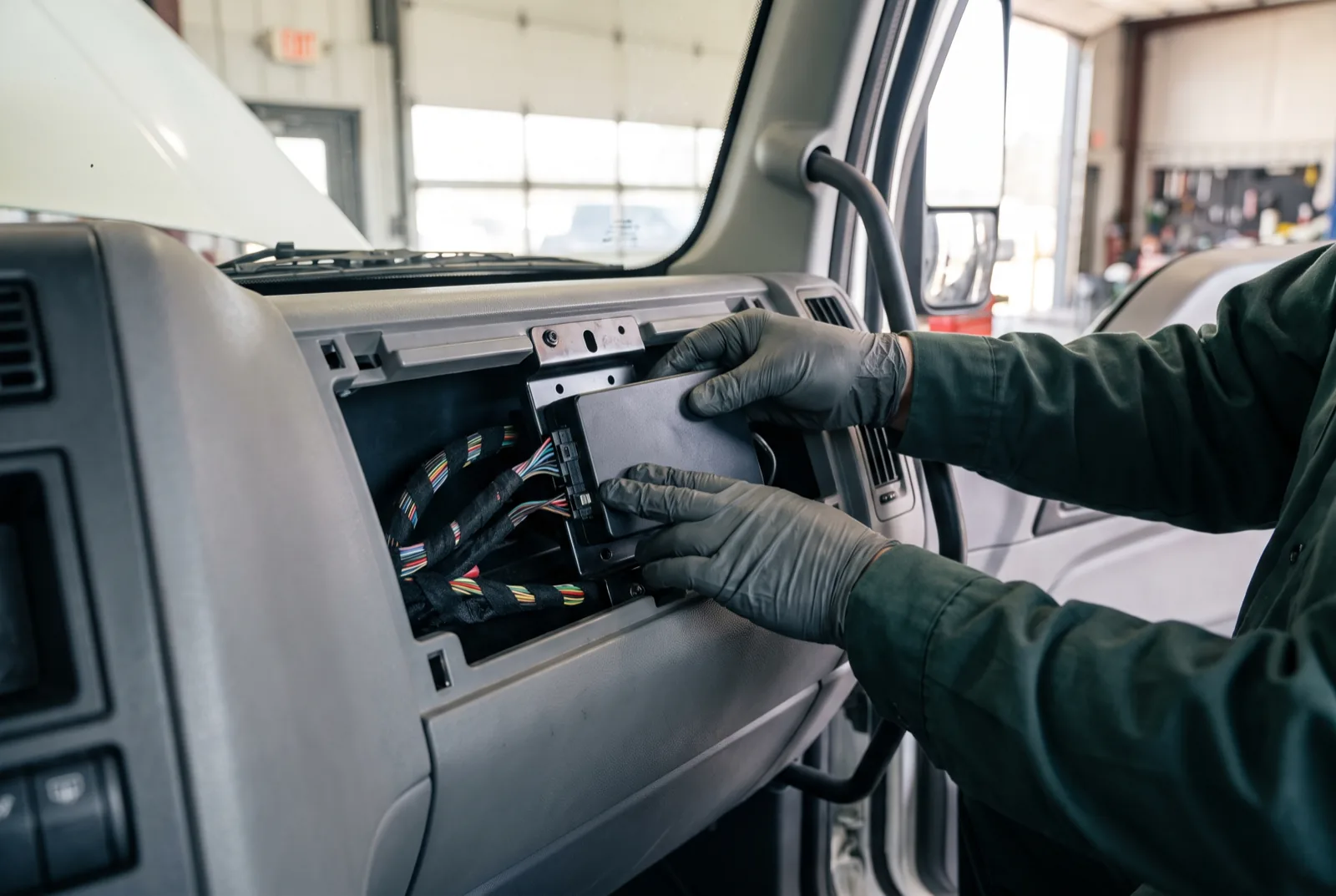
Fitted once, in an afternoon.
Certified hardware installed by trained technicians, or the devices you already own brought in over their own protocol. Either way no vehicle leaves the rota for more than a shift.
- Certified trackers, cameras and sensors, installed and commissioned on site
- Hardware you already own integrated wherever the protocol allows it
- Every installation logged against the vehicle, with the technician and the date
One depot first.
A fleet-wide rollout that begins everywhere at once ends nowhere. The first deployment is scoped small enough to finish and large enough to prove.
Scope
We walk one depot with your operations lead and agree what the first deployment covers: how many vehicles, which routes, and the three reports you need on day one.
Install
Hardware goes in shift by shift so the fleet keeps running. Data starts arriving from the first vehicle fitted, not from the last.
Handover
Your team is trained on the console, the reports are cut to the format you already circulate, and the second depot follows once the first is running clean.
Bring darb to your fleet.
We work with operators, ministries and regulators to put one record behind every commercial vehicle on the road.
Tell us about your fleet.
Send us the shape of the problem and we will come back with what darb would cover, what it would not, and what a first deployment looks like.
We use these details to reply to your enquiry and for nothing else.